
Armenian Traditional Dishes: A Taste of History and Hospitality
Armenian Traditional Dishes: A Taste of History and Hospitality
Armenian cuisine is shaped by centuries of history, the country’s varied landscapes and the customs of its people. Meals often bring family and friends together, with generous shared dishes made from seasonal produce, grains, herbs and locally raised meat. Recipes vary from one region and household to another, but hospitality is a constant: guests are warmly welcomed and rarely leave the table hungry.
Khorovats: Armenian Barbecue
Khorovats is a much-loved Armenian barbecue, usually made with pieces of pork, lamb or beef cooked over hot coals. Vegetables such as aubergines, peppers and tomatoes may be grilled alongside the meat, then served with fresh herbs, lavash and salads. Khorovats is especially associated with outdoor gatherings and celebrations, where preparing and sharing the meal can be as important as eating it.
Tolma: Stuffed Leaves and Vegetables
Tolma—also known in many places as dolma—is made by wrapping a savoury filling in vine leaves or cabbage. The filling often combines minced meat, rice, herbs and spices, although meat-free versions are also popular. Peppers, tomatoes and aubergines can be stuffed in a similar way. Tolma is a familiar dish at family meals and festive occasions, with recipes differing across Armenia and the wider region.
Harissa: A Slow-Cooked Comfort Food
Harissa is a hearty dish of wheat and meat, traditionally chicken or lamb, cooked slowly until the ingredients become soft and creamy. It is stirred until the grains and meat come together into a thick porridge-like texture. The dish has a strong place in Armenian food traditions and is often prepared for communal occasions. Despite its name, Armenian harissa is quite different from the spicy North African chilli paste.
Lavash: Bread at the Heart of the Table
Lavash is a thin, soft flatbread baked in a traditional underground clay oven called a tonir. It is used to accompany meals, wrap grilled meat and herbs, or scoop up dips and other dishes. Lavash can also be dried and stored, then softened with water when needed. Its preparation and sharing are recognised by UNESCO as part of the Intangible Cultural Heritage of Humanity, reflecting the bread’s importance in Armenian life.
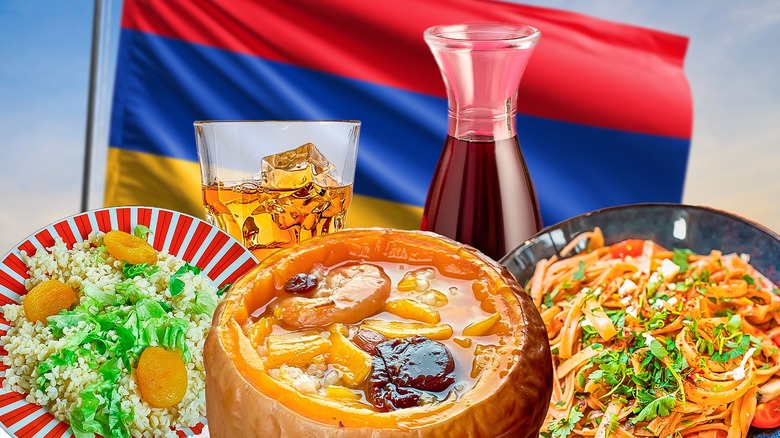
Ghapama: A Festive Pumpkin Dish
Ghapama is a whole pumpkin filled with a mixture of rice, dried fruit, nuts and, sometimes, honey or butter. It is baked until tender and often served as a striking centrepiece at celebrations. The contrast between sweet fruit, crunchy nuts and soft pumpkin makes ghapama a distinctive example of Armenia’s love of combining simple ingredients in generous, celebratory dishes.
Jingalov Hats: Herbs Wrapped in Bread
Jingalov hats is a flatbread filled with a mixture of finely chopped greens and herbs. The exact combination depends on the season and what is available, and may include wild herbs, leafy vegetables and spring onions. The dough is rolled thin, filled, folded and cooked on a hot griddle. This speciality is particularly associated with Artsakh and is a delicious reminder of the role that fresh greens play in Armenian cooking.
Spas: A Cooling Yoghurt Soup
Spas is a comforting soup made with yoghurt, wheat or grains, and herbs. It can be served warm in colder weather or chilled during the summer. Its tangy flavour and simple ingredients make it a refreshing contrast to richer meat dishes, and family recipes may vary in texture and seasoning.
Gata: A Sweet Treat for Sharing
Gata is a traditional Armenian pastry with a soft or flaky dough and a sweet filling, often made from flour, butter and sugar. It comes in many regional shapes and styles, from round loaves to smaller individual pastries. Gata is commonly served with tea or coffee and is a popular choice for holidays and family gatherings.
A Cuisine Made for Sharing
Armenian traditional dishes tell stories of place, season and family. From smoky khorovats and carefully prepared tolma to freshly baked lavash and sweet gata, the food is deeply connected to the pleasure of welcoming others. Trying these dishes offers more than a taste of Armenia: it offers a glimpse into a culture where cooking, sharing and hospitality go hand in hand.
Traditional Armenian Dishes: Frequently Asked Questions
- What are the most popular traditional Armenian dishes?
- What ingredients are commonly used in Armenian cuisine?
- What is the difference between Armenian tolma and dolma?
- Is traditional Armenian food spicy?
- What Armenian dishes are traditionally served at celebrations?
What are the most popular traditional Armenian dishes?
Some of the most popular traditional Armenian dishes include khorovats, a barbecue of grilled meat and vegetables; tolma, vine leaves or vegetables filled with rice, herbs and often minced meat; and harissa, a slow-cooked dish of wheat and meat. Lavash, a thin traditional flatbread, is served with many meals, while jingalov hats is a herb-filled flatbread especially associated with Artsakh. For something sweet, gata—a buttery pastry with a sweet filling—is a favourite. Recipes and ingredients vary across Armenia, with many dishes made for sharing at family gatherings.
What ingredients are commonly used in Armenian cuisine?
Armenian cuisine commonly uses fresh herbs and vegetables, grains such as wheat and rice, pulses, fruit, nuts and dairy products, alongside lamb, pork, beef and poultry. Garlic, onions, herbs such as coriander and parsley, and spices add flavour, while yoghurt and cheese feature in many dishes. Ingredients vary by region and season, but traditional cooking often celebrates simple, locally available produce.
What is the difference between Armenian tolma and dolma?
Armenian tolma and dolma belong to the same family of stuffed dishes, and the names are often used interchangeably. “Tolma” is the name commonly used in Armenia, while “dolma” is widely used in neighbouring cuisines and beyond; both may refer to vine leaves, cabbage or vegetables filled with rice, herbs and sometimes minced meat. There is no single strict distinction between them, as ingredients and preparation vary by region and family.
Is traditional Armenian food spicy?
Traditional Armenian food is generally flavourful rather than very spicy. Dishes are often seasoned with herbs, garlic, onion, black pepper and spices such as paprika, while fresh ingredients and slow cooking bring out their natural flavours. Some recipes can have a little heat, and spicy condiments may be served alongside, but chilli is not usually the main feature. As with any cuisine, recipes vary between regions and households.
What Armenian dishes are traditionally served at celebrations?
At Armenian celebrations, tables are often filled with dishes made for sharing. Khorovats (barbecued meat), tolma (vine leaves or vegetables stuffed with rice, herbs and sometimes meat), and lavash are popular choices, often served alongside salads, fresh herbs and seasonal vegetables. Festive meals may also include ghapama, a pumpkin filled with rice, dried fruit and nuts, while gata is commonly enjoyed as a sweet treat with tea or coffee. Traditions vary between families and regions, but generous hospitality is always part of the occasion.
Leave a Reply