Homemade Chicken Pot Pie: A Comforting Classic with Golden, Flaky Pastry
Homemade Chicken Pot Pie
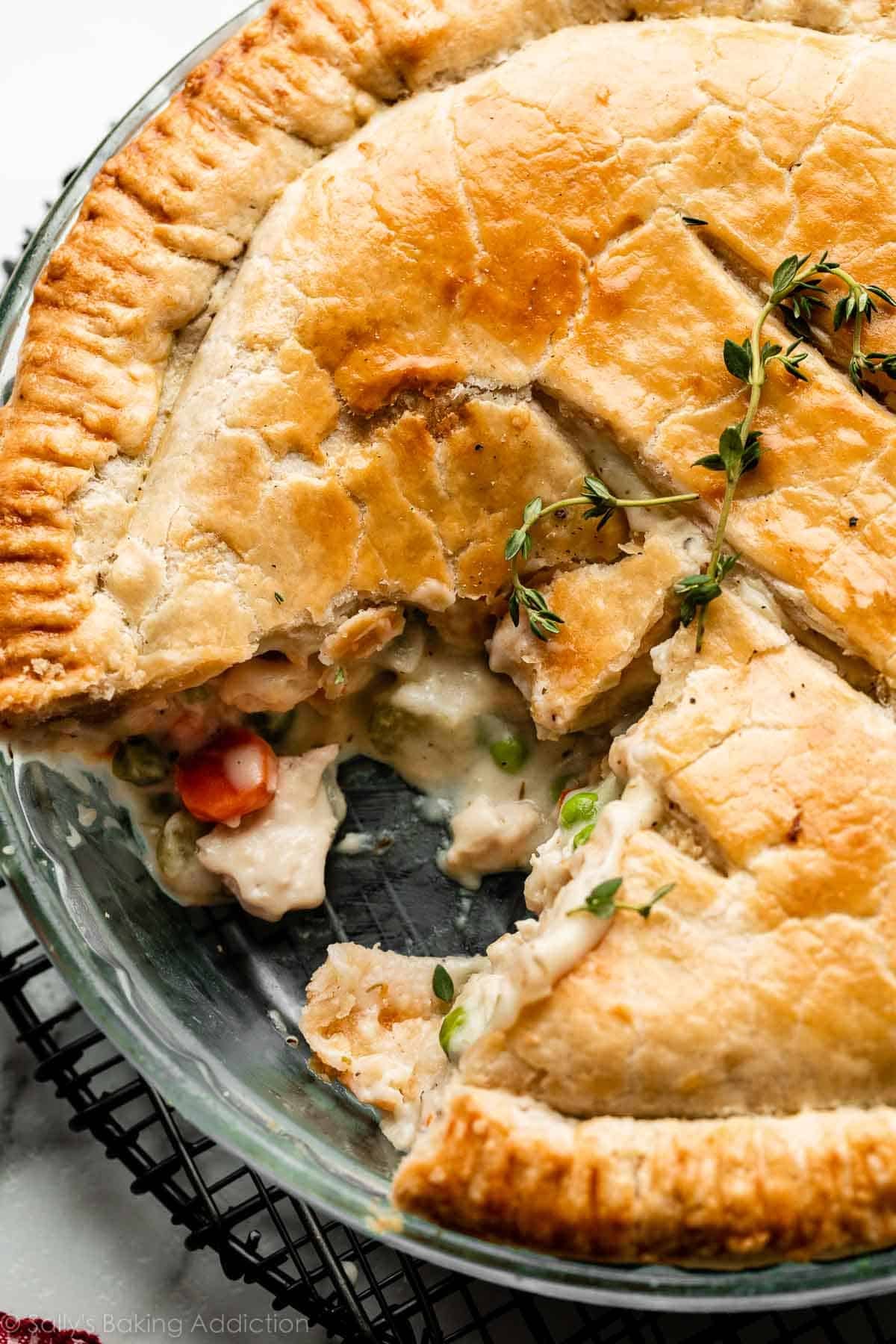
Golden, flaky pastry wrapped around tender chicken and vegetables in a creamy sauce makes chicken pot pie a comforting favourite. It is a satisfying meal for a chilly evening, and a useful way to turn leftover cooked chicken into something special. This version has a crisp pastry lid and a rich, savoury filling.
At a glance
- Serves: 6
- Preparation time: 30 minutes
- Cooking time: 45 minutes
Ingredients
For the pastry
- 250g plain flour, plus extra for rolling
- 125g cold unsalted butter, cut into cubes
- A pinch of salt
- 4–6 tablespoons cold water
- 1 egg, beaten, for glazing
For the filling
- 40g butter
- 1 onion, finely chopped
- 2 carrots, peeled and diced
- 2 celery sticks, diced
- 40g plain flour
- 500ml chicken stock
- 150ml double cream or whole milk
- 500g cooked chicken, cut into bite-sized pieces
- 150g frozen peas
- 1 teaspoon fresh thyme leaves, or ½ teaspoon dried thyme
- Salt and freshly ground black pepper
Method
-
Make the pastry. Put the flour and salt into a bowl. Rub in the cold butter with your fingertips until the mixture resembles breadcrumbs. Add the cold water a little at a time, mixing until the dough just comes together. Shape it into a flat disc, wrap and chill for at least 30 minutes.
-
Cook the vegetables. Melt the butter in a large saucepan over a medium heat. Add the onion, carrots and celery and cook for 8–10 minutes, stirring now and then, until beginning to soften.
-
Make the sauce. Stir in the flour and cook for 1 minute. Gradually pour in the chicken stock, stirring to keep the sauce smooth. Bring to a gentle simmer and cook for 5–7 minutes, until thickened. Stir in the cream or milk, chicken, peas and thyme. Season to taste, then leave the filling to cool slightly.
-
Prepare the pie. Heat the oven to 200°C (180°C fan) or Gas Mark 6. Spoon the filling into a deep pie dish. On a lightly floured surface, roll out the pastry until it is slightly larger than the dish.
-
Add the pastry lid. Brush the rim of the dish with a little beaten egg. Lay the pastry over the filling and press the edges down to seal. Trim away any excess and crimp the edge with your fingers or a fork. Cut a small slit in the centre to let steam escape, then brush the pastry with beaten egg.
-
Bake. Place the pie on a baking tray and bake for 30–35 minutes, until the pastry is puffed and deep golden and the filling is bubbling. Leave it to stand for 10 minutes before serving.
Tips for a delicious pie
- Cool the filling before adding the pastry. A hot filling can soften the pastry before it has a chance to bake.
- Keep the pastry as cool as possible while working with it, and handle it gently for a tender, flaky result.
- For extra flavour, use leftover roast chicken and include any meat from the legs as well as the breast.
- Put the pie dish on a baking tray to catch any filling that bubbles over.
- Make sure the filling is piping hot throughout before serving. If using freshly cooked chicken, it should reach a safe internal temperature of 75°C.
What to serve with chicken pot pie
Chicken pot pie is a hearty meal on its own, but it also goes well with steamed greens, tender-stem broccoli or a crisp green salad. For an especially comforting supper, serve it with buttery mashed potatoes.
Storing and reheating
Cool leftovers promptly and store them in a covered container in the fridge for up to two days. Reheat until piping hot throughout. The pie can also be assembled ahead of time: keep the filling and pastry separate in the fridge, then add the pastry lid and bake when ready.
Understanding Homemade Chicken Pot Pie: Ingredients, Crust, and Creamy Filling Explained
- What is the crust on a pot pie made of?
- What is chicken pot pie filling made of?
- What is chicken pot pie gravy made of?
- What are the main ingredients of chicken pot pie?
- What is the sauce made of in chicken pot pie?
- What makes chicken pot pie creamy?
What is the crust on a pot pie made of?
The crust on a homemade chicken pot pie is usually made from plain flour, cold butter, a pinch of salt and just enough cold water to bring the mixture together. This creates a tender, flaky pastry lid. Some recipes use ready-made shortcrust or puff pastry instead, while others add a bottom crust as well as a lid.
What is chicken pot pie filling made of?
Chicken pot pie filling is typically made with cooked chicken, vegetables such as carrots, peas, onion and celery, and a creamy sauce. The sauce is often thickened with flour and made using butter, chicken stock and milk or cream, then seasoned with salt, pepper and herbs such as thyme. Ingredients can be varied to suit your taste or make use of leftover vegetables.
What is chicken pot pie gravy made of?
Chicken pot pie gravy is usually made by cooking butter and flour together to form a roux, then gradually whisking in chicken stock until smooth and thick. Cream or milk adds richness, while salt, pepper and herbs such as thyme provide flavour. The chicken and vegetables are stirred through the sauce before the pie is topped with pastry and baked.
What are the main ingredients of chicken pot pie?
The main ingredients in a homemade chicken pot pie are cooked chicken, vegetables such as carrots, peas, onion and celery, and a creamy sauce made with butter, flour and chicken stock. These are topped with pastry—often shortcrust or puff pastry—and baked until golden. Seasonings such as thyme, salt and black pepper add extra flavour.
What is the sauce made of in chicken pot pie?
The sauce in chicken pot pie is usually made from butter, flour and chicken stock, with milk or cream added for a smooth, rich finish. The butter and flour are cooked together to make a roux, then the stock is stirred in gradually until the sauce thickens. Seasonings such as salt, black pepper and thyme add extra flavour.
What makes chicken pot pie creamy?
Chicken pot pie gets its creamy texture from a thickened sauce made with butter, flour and chicken stock, finished with double cream or whole milk. The butter and flour form a roux, which helps the sauce thicken, while the dairy adds richness and a smooth finish. For an extra-creamy filling, stir in a little more cream, but keep the sauce thick enough to hold its shape beneath the pastry.