Easy Tomato Pie Recipe: A Savoury Bake for Ripe Tomatoes
Tomato Pie Recipe
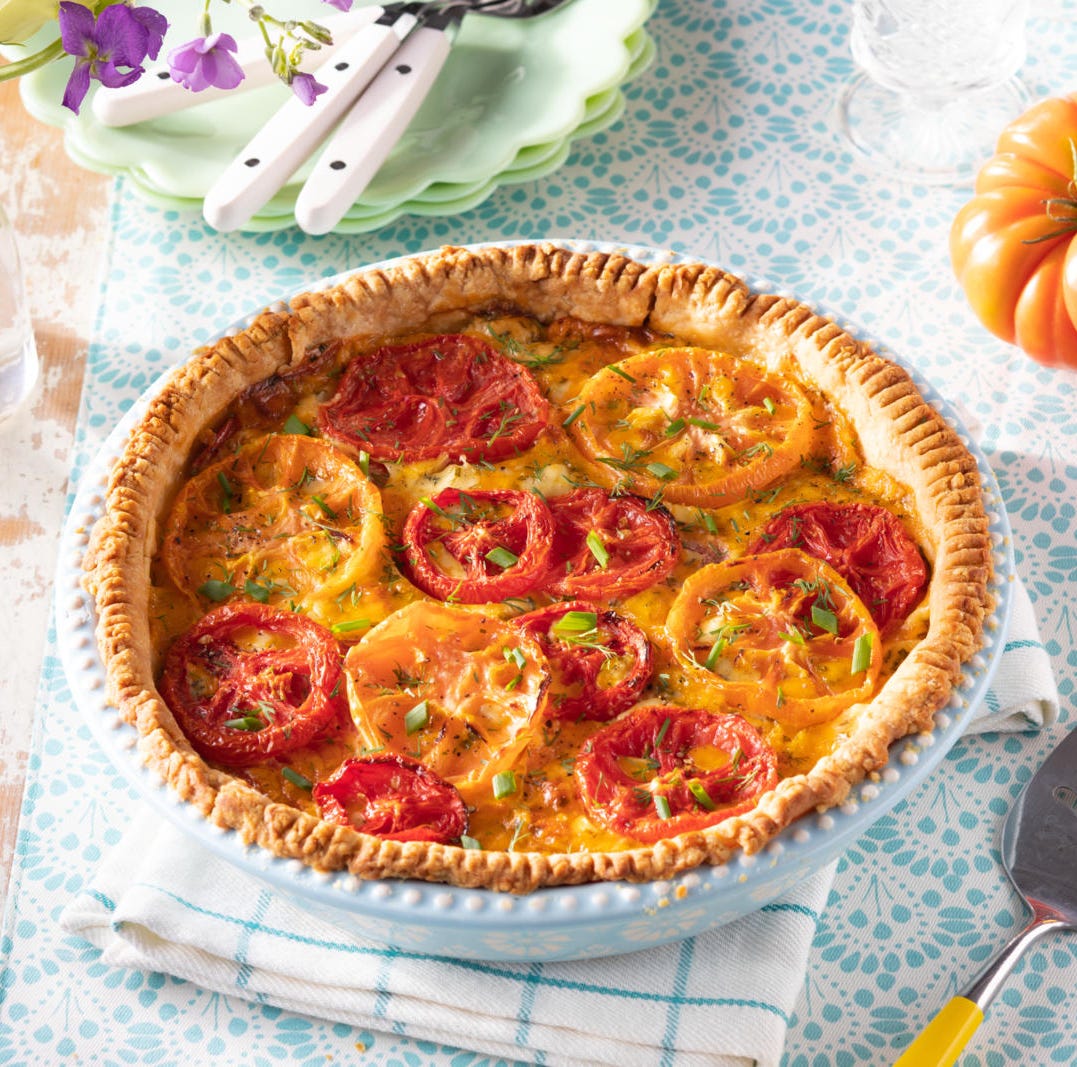
This savoury tomato pie is a lovely way to make the most of ripe, juicy tomatoes. A crisp pastry case is filled with tender tomatoes, fresh herbs and a creamy cheese topping, then baked until golden and bubbling. Serve it warm for lunch, or at room temperature as part of a picnic or light supper.
At a glance
- Preparation time: 25 minutes, plus 30 minutes to drain the tomatoes
- Cooking time: 35–40 minutes
- Serves: 6
Ingredients
- 1 sheet of ready-rolled shortcrust pastry, about 320g
- 700g ripe tomatoes
- 1 tsp fine salt
- 1 small onion, finely sliced
- 1 tbsp olive oil
- 1 tbsp chopped fresh basil, plus extra to serve
- 1 tbsp chopped fresh chives
- 150g mature Cheddar, grated
- 100g mozzarella, grated or torn into small pieces
- 120g mayonnaise
- ½ tsp freshly ground black pepper
- 1 tsp Dijon mustard (optional)
Method
- Prepare the tomatoes. Slice the tomatoes and arrange them in a single layer on a plate or tray. Sprinkle with the salt and leave for 30 minutes. This draws out excess moisture and helps prevent a soggy pie.
- Heat the oven. Preheat the oven to 200°C (180°C fan)/400°F/Gas Mark 6. Place a baking tray in the oven to heat.
- Prepare the pastry case. Line a 23cm tart tin with the pastry, pressing it gently into the edges. Trim off any excess, prick the base with a fork and chill for 10 minutes.
- Blind-bake the pastry. Line the pastry with baking paper and fill with baking beans or uncooked rice. Place the tin on the hot baking tray and bake for 15 minutes. Remove the paper and beans, then bake for a further 5 minutes until the base looks dry and lightly golden.
- Cook the onion. While the pastry bakes, warm the olive oil in a small frying pan over a medium heat. Add the onion and cook for 5–7 minutes until soft. Set aside to cool slightly.
- Dry the tomatoes. Pat the tomato slices thoroughly with kitchen paper to remove as much moisture as possible.
- Make the topping. In a bowl, mix the Cheddar, mozzarella, mayonnaise, black pepper and mustard, if using.
- Assemble the pie. Spread the cooked onion over the pastry base. Add the tomatoes in an even layer, scattering the basil and chives between them. Spoon the cheese mixture over the top and spread it gently to cover.
- Bake. Bake for 25–30 minutes, until the topping is golden and bubbling. Leave the pie to stand for at least 15 minutes before slicing, so the filling has time to settle.
- Serve. Scatter with extra basil and serve warm or at room temperature.
Tips for the best tomato pie
- Choose flavourful tomatoes. Ripe but firm tomatoes hold their shape and give the pie plenty of flavour.
- Don’t skip the draining step. Removing excess liquid is the key to a crisp pastry base.
- Try different cheeses. A little Parmesan can add savoury depth, while Gruyère makes a rich alternative to Cheddar.
- Make it your own. Add a pinch of chilli flakes, a few sliced spring onions or a little fresh thyme.
How to store tomato pie
Once cooled, cover and refrigerate the pie for up to three days. Reheat slices in the oven at 180°C (160°C fan)/350°F/Gas Mark 4 until piping hot. The pastry is best on the day it is baked, but leftovers are also delicious served cold.
Everything You Need to Know About Making the Perfect Tomato Pie
- What is in a tomato pie?
- Do you have to peel tomatoes for tomato pie?
- How to make a simple tomato pie?
- How to make tomato and onion pie?
- What is the original tomato pie?
- How to make tomato pie not soggy?
- Do you need to peel tomatoes for tomato pie?
- What are the ingredients for the best tomato pie?
What is in a tomato pie?
A tomato pie typically consists of a pastry crust filled with ripe tomatoes, herbs and a savoury cheese topping. In this recipe, the filling includes sliced tomatoes, onion, basil and chives, topped with a mixture of Cheddar, mozzarella and mayonnaise. Ingredients vary between recipes, but draining the tomatoes first helps keep the pastry crisp.
Do you have to peel tomatoes for tomato pie?
No, you don’t have to peel tomatoes for tomato pie. The skins soften as the pie bakes and help the slices hold their shape. If you prefer a smoother texture, or the skins are particularly tough, peel the tomatoes before slicing. In either case, salt the slices and pat them dry before adding them to the pie to remove excess moisture and help keep the pastry crisp.
How to make a simple tomato pie?
To make a simple tomato pie, line a tart tin with shortcrust pastry and blind-bake it until lightly golden. Slice ripe tomatoes, sprinkle them with salt and leave them to drain for about 30 minutes, then pat them dry to prevent a soggy base. Arrange the tomatoes in the pastry case with a little chopped basil, and top with a mixture of grated cheese and mayonnaise. Bake at 200°C (180°C fan) for about 25–30 minutes, until golden and bubbling, then leave to rest before serving.
How to make tomato and onion pie?
To make tomato and onion pie, line a tart tin with shortcrust pastry and blind-bake it until lightly golden. Slice ripe tomatoes, sprinkle them with salt and leave them to drain for about 30 minutes, then pat dry. Soften sliced onions in a little olive oil and spread them over the pastry base, followed by the tomatoes and herbs such as basil or thyme. Top with grated Cheddar mixed with a little mayonnaise, then bake at 200°C (180°C fan)/400°F/Gas Mark 6 for 25–30 minutes, until golden and bubbling. Leave the pie to rest before slicing.
What is the original tomato pie?
The name “tomato pie” refers to more than one traditional dish. In the American South, particularly in parts of the Carolinas, it usually means a baked savoury pie made with fresh tomatoes, herbs and a creamy cheese topping in a pastry crust. In Italy, *torta di pomodoro* describes a range of tomato-filled pies, often made with regional ingredients. There is also the Sicilian-American bakery style: a thick, rectangular pizza topped with tomato sauce and usually served without cheese. So there is no single universally recognised original tomato pie; the version depends on the region and its food traditions.
How to make tomato pie not soggy?
To keep tomato pie from becoming soggy, remove as much moisture from the tomatoes as possible before baking. Slice them, sprinkle with salt and leave them to drain for about 30 minutes, then pat them dry with kitchen paper. Blind-bake the pastry case until lightly golden, and avoid overfilling it with wet ingredients. For extra protection, brush the pastry base with a thin layer of beaten egg after blind-baking, then let it set briefly before adding the filling.
Do you need to peel tomatoes for tomato pie?
No, you don’t need to peel tomatoes for tomato pie. The skins soften as the pie bakes and help the slices hold their shape. If the skins are particularly tough, you can remove them by briefly blanching the tomatoes in boiling water, then transferring them to cold water before peeling. Whichever you choose, salt and drain the sliced tomatoes first to remove excess moisture and help keep the pastry crisp.
What are the ingredients for the best tomato pie?
For the best tomato pie, use ripe but firm tomatoes, well-drained to prevent a soggy pastry base, and pair them with crisp shortcrust pastry, sweet onion, fresh basil and chives. A generous topping of mature Cheddar and mozzarella mixed with mayonnaise creates a creamy, golden finish, while black pepper and a little Dijon mustard add extra savoury flavour.